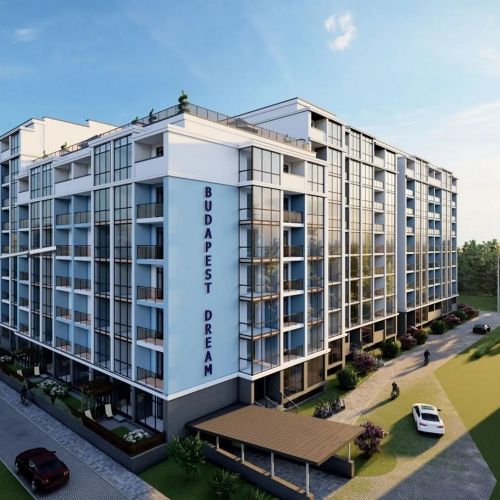

Analysis of the Residential Construction Market in Ukraine
Current Market Situation
According to data, in 2024 the demand for new buildings in Ukraine amounted to only 20% of the pre-war level, while the demand for secondary housing reached 70% of pre-war levels. This indicates a significant decline in interest in new constructions, caused by military actions and economic instability. Nevertheless, the market is gradually adapting to the new conditions, and in some regions, there is a revival of construction activity, considering that some regions are effectively on the front line of the conflict, while others are 500 or more kilometers away, bordering NATO countries.
Impact of the War on the New Construction Market
The military conflict has significantly impacted the residential construction market in Ukraine. Many projects have been suspended or frozen, especially in areas of active fighting. However, in relatively safe regions, such as Western Ukraine, construction continues, and some developers, with slight delays, are steadily commissioning new properties.
Investors should take into account that the recovery of the market directly depends on the stabilization of the situation in the country and the end of hostilities. Still, overall, the western regions of Ukraine have adapted well over four years of conflict and, on the contrary, are actively developing and growing due to the influx of internally displaced people from the east. Therefore, investments in Ukrainian real estate for foreign investors remain a relevant and highly promising direction, with risks similar to any other market.
Price Trends and Forecasts
Despite the decline in demand, prices for new constructions in some regions of Ukraine show a tendency to rise. For example, in Lviv, the cost per square meter in new buildings increased by 14% in 2024. Forecasts for 2025 indicate a possible price increase for comfort-class new buildings up to 15%, and for business-class properties — from 5% to 10%. The main factors driving prices include rising costs of construction materials, inflation, and a shortage of qualified labor.
Investment Options in Residential Construction
The market for new residential real estate in Ukraine offers investors a wide range of capital investment strategies. The stage of project readiness, legal structure of the deal, and investor goals all affect both the potential return and associated risk. Some approaches imply long-term investments focused on capital growth, others — fast capital turnover or obtaining stable rental income. It’s important to consider not only the object’s price, but also the property’s liquidity, demand in a specific location, and the level of trust in the developer.
Investing at the Foundation Stage
This is the most profitable but also the riskiest form of investment. Housing is acquired before active construction work begins — at the stage of documentation, foundation, or early floors. At this stage, the price per square meter can be 25–40% lower than the market price, allowing for high margins when selling after commissioning. However, it is crucial to thoroughly check the developer’s reputation, permits, and access to credit financing, as projects at this stage are most often frozen or delayed, especially in Ukraine where stage-by-stage construction regulation is not legislated as it is in EU countries.
Purchasing at the Final Stage of Construction
A more balanced strategy with moderate risk. Buying an apartment 3–6 months before commissioning allows the investor to save 10–15% compared to the market price of ready housing and to start generating income (sale or rent) faster. This approach is preferred by foreign investors who want to shorten the market entry period and do not plan to oversee the construction. Nevertheless, it is important to ensure that the developer has no debts to contractors and utility companies, which could delay obtaining occupancy permits.
Investing in Apartments for Rental
This type of investment is focused on regular passive income. Compact studio apartments and one-bedroom units in central areas of major cities, near universities, IT clusters, and business centers, are especially in demand. The average return on short-term rentals can reach 8–12% per annum in USD, and for long-term rentals — 5–8%. Attention should be paid to the quality of finishing, engineering systems, and the legal possibility of leasing (for apartments in non-residential buildings, such conditions need to be clarified separately).
Purchasing Commercial Property in Residential Complexes
Investors are increasingly turning their attention to commercial premises within residential complexes: shops, coffee shops, pharmacies, salons, and offices. These are located on ground floors and benefit from high foot traffic. Profitability of such investments can exceed that of residential properties — up to 15% per annum — especially if the property is well-located and already leased to an anchor tenant. However, this segment has a higher entry threshold and requires a better understanding of market conditions, as well as a license for using the premises according to their intended purpose.
Joint Investments or Equity Participation in Projects
A form of investment where the investor does not purchase a specific apartment but joins a construction project as a capital shareholder. This can be a classic collective investment scheme through a fund or SPV (special purpose vehicle), or direct cooperation with a developer. The advantage is the opportunity to participate in large-scale projects with risk diversification and a lower entry threshold through resource pooling. However, such models require a detailed analysis of partnership agreements, project business plan transparency, and profit distribution upon commissioning — and in the case of commercial property, with further equity in the management company.
Described above are 5 main strategies for investing in newly built housing in Ukraine, among which the most high-risk ones include foundation-stage investments, and more moderate-risk strategies include investing with the intent to lease the property.
Risks and Pitfalls for Foreign Investors
- Legal risks. Challenges with registering property rights, the need for thorough document checks, and assessment of the developer’s reputation.
- Construction risk. A high probability of project freezing or halting due to the developer’s financial problems or force majeure circumstances.
- Currency exchange fluctuations. The impact of inflation and national currency instability on investment value and potential return.
- Political and economic instability. The influence of military actions and political decisions on the real estate market and the investment climate in general.
- Infrastructure risks. Underdeveloped infrastructure in the construction area, which may reduce the property's appeal to renters or buyers.
Regional Specifics and Investment Costs
The cost of newly built housing in Ukraine varies significantly depending on the region:
- Kyiv. The average cost per square meter in new builds is about $1350, but unfortunately, very few truly active construction projects remain in Kyiv.
- Lviv. Prices increased by 2.5% in 2024 and reached $1108 per square meter, though in comfort-class complexes, they are similar to those in Kyiv.
- Odesa. The price per square meter remained unchanged at $890.
- Kharkiv. After a price drop in 2022, the cost per square meter has not recovered. As of 2024, there are no ongoing residential construction projects in the city, and the average price for newly completed housing starts at $800 per square meter.
Investors should take into account that western regions of Ukraine, such as Lviv and Ivano-Frankivsk, show more stable price and demand growth, which is linked to internal population migration to these areas and their distance from conflict zones.
Central regions of Ukraine have almost completely halted new residential construction, while in Western Ukraine, the number of residential complexes and commissioned square meters has actually increased compared to the pre-war year of 2021.
Practical Recommendations for Foreign Investors
Entering the market of under-construction housing in Ukraine requires a systematic approach, especially for investors unfamiliar with Ukrainian law and development practices. The presence of active military operations, differences in regulations across regions, and a high proportion of projects with non-transparent financing schemes make preliminary analysis essential. Foreign investors should proceed step-by-step, starting with the choice of jurisdiction, location, and a reliable developer. Without proper preparation, even a promising project may result in losses or legal disputes.
Practical recommendations for a foreign investor in new residential construction projects in Ukraine may include the following:
- Thorough due diligence on the developer. Before investing in a new build, it is necessary to verify permits, track record of completed projects, and the presence of lawsuits or outstanding debts.
- Legal risk assessment. It is recommended to engage a professional real estate lawyer, such as those on the TridentEstate team, to review the construction participation agreement or investment agreement, especially if the property is purchased through an intermediary.
- Analysis of location and development prospects of the area. Location is one of the key success factors in real estate investment. It is important to consider transportation access, availability of schools, healthcare facilities, and the development of social infrastructure.
- Verification of the payment mechanism. Transparent payment conditions are especially important for foreign nationals. It should be clarified whether it is possible to open a special investment account or to pay through authorized banks.
- Contract execution with legal oversight. The deal should be notarized, and in the case of equity participation, the contract must be registered in the State Register of Property Rights.
Conclusions
The market of under-construction housing in Ukraine remains a high-risk but promising investment direction, especially in the western and central regions of the country. Despite challenges such as martial law, rising construction material costs, and reduced demand, developers are adapting by offering flexible conditions and reliable properties.
Potential benefits include appreciation of property value by the time of commissioning, stable rental income, and the opportunity for profitable resale. However, without proper legal and market preparation, investments may result in losses. Major risks include incomplete construction, complications with property rights registration, and a lack of transparency in some financing models.
Foreign investors are advised to focus on projects that are at least 50–70% completed and are implemented by companies with a flawless reputation. It is also important to consider regional specifics: invest in cities with steady rental demand and internal migration pressure. In the context of Ukraine’s economic transformation, the new construction market may become an attractive asset for long-term capital investment, provided a cautious and informed approach is taken.
This material was prepared by specialists from TridentEstate (Trident.Estate). All materials about real estate investment in Ukraine on the blog at www.trident.estate are for informational purposes only and do not constitute direct recommendations regarding property purchases in Ukraine. To plan your investments in Ukraine, you should contact our specialists. Below this article, you will find a form through which our investment advisor will get in touch with you.
FAQ. Answers to Key Questions
-
Can a foreigner buy an apartment in a building under construction in Ukraine?
Yes, foreign individuals are free to invest in real estate, including properties under construction. However, the transaction requires careful analysis of legal aspects, especially during the equity participation stage.
-
How safe is it to invest in new buildings during wartime?
-
What documents should be requested from the developer before buying?
-
What return can be expected from investments in new buildings in Ukraine?
-
Where are the best current conditions for investing in new buildings in Ukraine?